Free template
Free sales plan template: create a sales plan that adds up
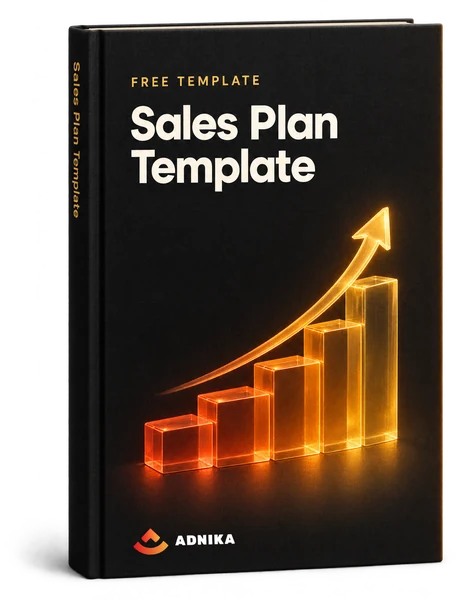
This sales plan template is a 10-section Word document for founders and sales leaders planning a quarter or a year: targets, team, market, tactics and budget in one place. Fill in the grey prompts, delete them as you go, and you'll have a plan to put in front of leadership or an investor.
- Target market and omissions
Personas and regions, plus the part most plans skip: the buyers your reps shouldn't chase.
- Team and new hires
Who leads, how the team is split and where it's short. Do the maths before you post a job ad.
- Competitor table
Three rivals side by side, with the counterpoint a rep can use when a buyer brings one up.
- Goals and budget
Revenue, deals and units for the period. Then the bill: salaries, commission, software, training, travel.
Get the sales plan template
Your template is ready
The ZIP holds one Word file. Save a copy for the period you're planning, then start with the Goals section.
Download Sales Plan TemplateA copy is on its way to your inbox too.
What's inside
What the sales plan template includes
You get one Word document: a how-to page, a cover, a contents page and 10 sections, each with grey prompts that tell you what to write.
All of it is editable. Cut what you don't need, and put anything missing (a risks section, say) in the blank section at the end.
Mission and background
Mission, vision and a short company story. Half a page is plenty; it's there so a new hire or an investor understands why the targets further down look the way they do. Don't paste in your About page.
Team
Sales leadership first, then how the sales department is organised (by region, team or hierarchy; an org chart fits here). The New Hires prompt asks where the head-count gaps are and what happens until they're filled. Your capacity maths goes here.
Target market
Locations and why you chose them, buyer personas (semi-fictional profiles of your target customer, drawn from research and real customer data) and omissions, the buyers you won't pursue. We'd fill in omissions first. That list keeps reps off deals that were never going to close.
Tools, software and resources
Your CRM (customer relationship management) system and how it's used at each stage of your sales cycle, plus any other software, AI tools included. Below that, the sales tools reps lean on: case studies, negotiation guidance. Missing something? Add it.
Positioning and competitors
Market conditions, value proposition, competitive advantages and pricing, including your rules on discounts. A table compares three competitors: where you beat each one, where each one beats you, and the counterpoint a rep can use when a buyer brings that up.
Marketing and prospecting
A short marketing strategy brief for sales, channel by channel (email, content, video, events, customer and referral marketing, direct mail, social), each with a named contact. Prospecting covers what a lead must look like before outreach, plus your inbound follow-up and outbound calls and emails.
Action plan and goals
Tactics with numbers on them, such as calls a week, site visits or named accounts to work. Goals holds the sales targets for the period: revenue (booked and live), deals, units per product line, and anything else you track, like MRR (monthly recurring revenue) or retention.
Budget
Salaries and sales compensation (bonus and commission), software, discounting, training, travel, even food. The template suggests setting the sales budget beside your sales forecast. It's a good habit: a plan that costs more than it can bring in shows up straight away.
How to use it
How to write an effective sales plan
Don't fill it in from top to bottom. Start with the numbers, because every other section is there to support them.
Start with the revenue goal
Open Goals first and write the revenue goal for the period. Then work backwards: divide it by your average deal size to get the deals you need, and that by your win rate to get the opportunities. If the answer looks impossible, good. Better to learn it in week one than in month nine.
- Revenue goal, booked and live
- Deals = revenue ÷ average deal size
- Opportunities = deals ÷ win rate
Check the team can carry it
Now Team. Work out what one ramped sales representative (someone past onboarding) closes in a period and how many you'll have each month. New hires rarely sell at full pace straight away, so count each as part of a person. The shortfall goes under New Hires.
- Quota per ramped rep
- New hires counted at a fraction
- The gap becomes a hiring plan
Choose who to sell to, and who to skip
Fill in Target Market and Positioning side by side. Personas and omissions decide where the hours go; the competitor table decides what reps say when a rival comes up. Two or three personas is plenty. Eight is a wish list, and it spreads your sales efforts thin.
- Two or three personas
- A written omissions list
- Counterpoints for three competitors
Decide where opportunities come from
Your opportunity number needs a source. In the marketing and prospecting sections, name the channels at the top of your sales funnel and what a lead must look like before a rep calls. Then write the sales tactics, each with an owner and a date.
- Channels that feed the pipeline
- Criteria for outreach
- Tactics with owners and dates
Cost it, share it, book the reviews
Finish with Budget and set it beside the forecast, so sales and finance are looking at the same numbers. Delete the grey prompts, fill in the cover and book review dates before you send it round. Goals only hold if someone checks them.
- Budget checked against the forecast
- Prompts deleted, cover filled in
- Review dates booked
Sales plan guide
Targets, quotas and sales plan examples
Below is the thinking behind the template: the steps, the maths, worked examples and the mistakes we see most.
Sales plan vs sales strategy
The strategy decides where you compete and why buyers should choose you; the sales plan turns that into a roadmap for one period, meaning who sells what, to whom, by when and on what budget. A business plan sits above both and covers the whole company, finance and operations included. Work top down. If you're still deciding how to build a winning sales strategy, start there, since no strategy template can make those calls for you.
Read moreHow to write a sales plan in 7 steps
Seven steps, in this order. Pull last year's sales data: win rate, average deal size, sales cycle length. Set the revenue target and split it by quarter, month and rep. Check capacity (the ramped reps you'll really have, not the ones on the org chart). Define the target market: your ideal customer profile (ICP) and your omissions. Choose your sales strategies and tactics, each with an owner. Cost it, and hold the total up against the forecast. Then pick the KPIs (key performance indicators) you'll review, and when. Steps two and three loop, so expect to go round twice.
Quota and capacity planning: a worked example
Here's the maths with example numbers (it works the same in AED or SEK). Say your new business revenue target is $2.4M for the year. If you add a 10% buffer for deals that slip, you're planning for $2.64M. You have 6 ramped reps and 2 January hires at half pace for six months; each hire counts as 0.75 of a rep, so the team is 7.5. That puts the quota per ramped rep at $352,000. If your win rate is 25%, you need about $10.6M of new sales pipeline, and with a 90-day cycle each quarter's share must exist a quarter early. The Word file has no formulas, so do the sums in a sheet and copy the results into Goals and New Hires.
Sales plan examples for three businesses
These are made-up but typical. Take a B2B IT services firm in Abu Dhabi: its plan might set a revenue target of AED 6M, aim at IT and facilities managers in mid-size companies, and list government procurement tenders under omissions because the team can't carry the paperwork. An online homeware retailer's plan looks different, with units per product line in Goals and most of the budget going on discounts and paid social. And a Stockholm SaaS company opening Gulf accounts? It adds the UAE and Saudi Arabia under Locations, expects longer sales cycles while it builds references, and tracks MRR.
Sales plan types: annual, territory, account and more
The annual plan, sometimes called a strategic sales plan, is what this template is laid out for; a quarterly plan is the same over a shorter period. A territory plan splits the market by region or segment, and an account plan goes deep on a few large customers. Others cover a product launch, a new market or a new hire's first 90 days. Each fits this template once you trim what you don't need (an account plan barely needs the marketing section).
30-60-90 day sales plan for a new rep or manager
A 30-60-90 day plan splits a new hire's first three months into learn, contribute and own. Days 1 to 30: product training, CRM access, shadowing calls, an account list. Days 31 to 60: first meetings with a manager on the call, plus smaller deals of their own. Days 61 to 90: a ramped share of quota and a forecast they own. Create a plan for each hire with two or three checkable goals per phase, and don't rush the ramp. The file has no 30-60-90 page, but the tactics section adapts easily.
Read moreSales action plan: from targets to weekly activity
Turn the annual number into what people do on a Monday morning. Example: a rep needs 4 new opportunities a month, and 1 in 5 first meetings becomes one, so that's 20 first meetings a month, or about 5 a week. Write that down as the weekly target, with the owner and the KPI beside it. Sales activities are the part of your plan a rep controls every day, which is exactly why they belong in it.
Aligning the sales plan with marketing
Put marketing's commitments in writing. HubSpot's 2025 State of Sales report found that 96% of prospects research on their own before they talk to a sales rep, so content does part of the selling before your team gets involved. Sales and marketing alignment is still patchy, though: over 27% of marketers call it a top challenge in HubSpot's 2026 State of Marketing report, yet only 8% make fixing it a top goal. A short SLA (service level agreement) sets the lead definition, the monthly lead number and how fast sales follows up.
Read moreCommon sales plan mistakes
Many sales plans slip in the same places. Targets set top-down with no capacity check, so sales quotas look fine on a slide and impossible in the field. Personas with no omissions list. A marketing section pasted from the marketing plan that nobody in sales reads. A budget that never meets the forecast. And the big one: a plan opened in January and never again. The template's prompts catch most of these. The last needs a calendar invite.
Adapting it for B2B or B2C, and small or large teams
In B2B sales, and enterprise sales especially, deals are fewer and bigger, so spend your words on accounts, personas and the stage of the sales process where deals stall. A B2C or ecommerce plan leans on units, channels and discounting instead. Solo founder, doing business development between everything else? A one-page plan will do: target, customer, three tactics, budget. Once there are several teams, you'll want a comprehensive sales plan, owned by a VP of sales, with territories split across the sales staff.
Sales metrics and review cadence: what good looks like
The best sales plans get checked against reality every week. Review the pipeline weekly and the forecast monthly, then re-plan each quarter once you can see whether win rates and cycle times held up. Track sales performance with a few clear sales KPIs: revenue against target, pipeline coverage, win rate, activity. HubSpot's 2025 State of Sales report found that 42% of sales pros name annual recurring revenue (ARR) as their most important success metric. If that's how your sales team is judged, put ARR or MRR in Goals.
Need a hand?
Where we can help your sales team
Prefer a second pair of hands on the numbers, or on the systems that track them? That's where Adnika comes in.
- 01
Sales consulting
We'll work through targets, quotas and capacity with you, then pressure-test the plan before it reaches leadership.
- 02
CRM pipeline set-up
Deal stages, properties and reports set up to match your sales process, so the plan's numbers are tracked from week one.
- 03
Marketing and sales alignment
Getting both teams to agree the lead definition, the hand-off and the follow-up time, then putting it in writing.
- 04
Lead scoring
Scoring set up in your CRM, so reps call the people most likely to buy before everyone else.
FAQ
Sales plan template questions
Short answers to what people ask most about sales plans, and about this template.
Start with the number, not the mission statement. To build a sales plan that holds up, set the target, work out how many deals and opportunities it takes, and check the team can carry that load. Market, positioning and tactics come next. Cost it last.
From two directions. Leadership hands down a revenue goal; you add up what each ramped rep can realistically close, based on last year's win rates and deal sizes. Where the numbers disagree, you hire, move the target or find a new channel. That gap is where the real planning happens.
Review last year's results, set and split the target, check capacity, define the target market, choose strategies and tactics, cost the plan against the forecast, then set KPIs and review dates. The order matters, because each step needs the answer from the one before. Jump ahead and you'll redo the tactics.
It's a sales plan that spells out the strategy as well as the execution: where you compete and why buyers should choose you, then the targets, team, tactics and budget behind it. That's why sales strategy templates and sales plan templates look so alike.
There's no official list, but a common answer is the sales plan, the proposal, the quote, the contract, and a case study or battlecard (a one-page cheat sheet on a competitor). Only the plan stays in-house. The competitor table in this template makes a decent first battlecard.
It's a way of planning a new sales rep's first three months in 30-day phases, and it works for new sales managers too. Month one is for learning, month two for contributing with support, month three for owning a share of quota. Nobody gets judged on month-three numbers in week two.
One with clear goals for each phase, agreed on day one and checked at days 30, 60 and 90. For example: CRM set up and calls shadowed by day 30, first opportunities by day 60, a ramped share of quota by day 90. 'Learn the product' isn't a goal unless someone can test it.
Ten sections in one Word file: mission and background, team, target market, tools, positioning (with a competitor table), marketing, prospecting, tactics, goals and budget. Each has grey prompts telling you what to write, and there's a blank section at the end for anything else.
Google Docs, yes: upload the .docx to Google Drive and open it there. Excel, no, because it's a Word document. If you want the quota maths in a spreadsheet, rebuild the worked example on this page (a handful of simple formulas) and paste the results into Goals.
Check it monthly and rewrite it quarterly. The template notes that your goals depend on how often you update the plan, so pick the rhythm before you set your sales goals. Change quotas mid-quarter only for a real reason, like a territory change or a rep leaving.
No questions match — try another search.
More free templates
More free templates for sales and marketing
Planning the marketing side as well? These free downloads pair well with a sales plan.
 Calculator
Lead Goal Calculator
Work out how many leads marketing must hand to sales each month to hit the revenue target, then track every region against that plan.Use the calculator Kit
Consultant's Success Kit
Eight templates for consultants: a consulting plan, business plan, marketing and sales plans, SWOT, Five Forces, an onboarding checklist and a 16-slide client deck.Get the free kit Template
Marketing Plan Template
A Word marketing plan template with a SWOT table, target market and personas, a marketing mix section, a budget table and a channel plan.Get the free template Template
Social Media Content Calendar
An Excel calendar for planning posts on X (Twitter), Facebook, LinkedIn, Instagram and Pinterest, with a monthly planner, a posting schedule and a content library.Get the free template
Free download
Set your sales targets, then plan the team around them
Download the Word file, open Goals first and work backwards from the number. The download link appears here as soon as you submit the form.