Contents26
- Lifecycle marketing, defined
- Why lifecycle marketing matters for growing brands
- The five stages of the customer lifecycle
- Stage one: awareness
- Stage two: consideration
- Stage three: purchase
- Stage four: retention
- Stage five: loyalty and advocacy
- Lifecycle marketing compared with the funnel and the customer journey
- The channels behind a lifecycle programme
- Lifecycle marketing examples from four industries
- Clinics and healthcare
- Hotels and restaurants
- Schools and universities
- Online shops
- How to build a lifecycle marketing programme
- Step one: map your stages and the signals between them
- Step two: bring your customer data into one place
- Step three: segment by stage and behaviour
- Step four: write the message for each stage
- Step five: set the timing and the exit rules
- Step six: measure, test and adjust
- The metrics that show lifecycle marketing is working
- Where AI fits in lifecycle marketing
- Common lifecycle marketing mistakes
- Getting started with lifecycle marketing
Most brands spend the bulk of their budget winning a first sale, then go quiet once the order ships. Lifecycle marketing closes that gap by planning what each customer hears before, during and after every purchase. The aim is to move people from stranger to buyer, then from buyer to regular. This guide covers the stages, the channels and the steps to build your own programme, with examples from several industries.
You don't need a large team or expensive software to start. Most businesses already hold the customer data and the channels, and what they lack is a plan joining the two. By the end, you'll know which messages fit each stage and how to tell whether they're paying off.
Lifecycle marketing, defined
Lifecycle marketing is the practice of matching your marketing to where each customer stands in their relationship with your brand. Someone reading your blog for the first time needs something different from a customer placing a fifth order. A lifecycle approach plans for both of them, and for every stage in between.
Traditional campaign marketing works the other way round. You pick a date, write one message and send it to your whole list at once. So a discount lands with someone who paid full price yesterday. A welcome email reaches a client who has been ordering from you for years.
Lifecycle marketing replaces that guesswork with rules, where every contact sits in a stage and every stage has one goal. Each message exists to move the person one step closer to the next stage.
Why lifecycle marketing matters for growing brands
Winning a new customer usually takes more effort than keeping one you already have. A returning buyer knows your product and trusts your delivery, so they need less persuading at the checkout. Happy customers also recommend you to friends, which feeds new people into the top of your funnel at no extra cost.
Yet many marketing plans stop at the first sale. Spend goes into ads and search, while the customer list sits idle between seasonal promotions. Lifecycle marketing puts that list to work and gives every past buyer a planned next step.
The approach also gives you clearer numbers. Track how many people move from each stage to the next, and you'll see where customers drop away and what to fix first.
The five stages of the customer lifecycle
Models differ in their labels, but most split the customer lifecycle into five stages. Your business might merge two of them or add one of its own, and that's fine. What matters is a clear signal for when someone enters each stage and when they leave.
Stage one: awareness
Awareness is the point where people first come across your brand. They might find a blog post, watch a short video or see an ad while scrolling. Nobody is ready to buy yet, so the goal is to earn attention and give them a reason to come back.
Useful content does most of the work at this stage. Guides and comparison pages answer the questions people type into search before they know your name. Each page should answer one real question, and the pages perform well when they're part of a planned content marketing strategy.
The stage ends when someone gives you a way to reach them again, such as an email sign-up or a social follow.
Stage two: consideration
In consideration, people know who you are and are weighing you against other options. They read reviews, compare prices and look for proof you'll solve the problem they came with. Your job is to give them the facts they need to decide, without pushing too hard.
Email sequences work well here because the person has already shown interest. A welcome series might explain how your product works, answer common objections and share a customer story. Retargeting ads remind people who visited a product page but left without acting. Keep the tone helpful, as hard selling at this point tends to push people towards a competitor.
This stage ends when the person buys, books or signs up for whatever you sell.
Stage three: purchase
The purchase stage covers the moment of buying and the first few days after it. Many brands treat the order confirmation as the end of the job, and that's where lifecycle thinking starts to pay off. A customer's first experience of your product shapes whether they ever come back.
Send a clear confirmation, then follow with setup tips, care instructions or a short guide to getting more from the purchase. Ask for feedback once the product has had time to prove itself, rather than the same afternoon. For a service business, this stage is the first appointment, and the follow-up message afterwards matters as much as the visit.
Stage four: retention
Retention is about turning a single purchase into a habit. The customer has bought once and now needs a reason to pick you again over the next option they see. Timing matters more here than at any other stage.
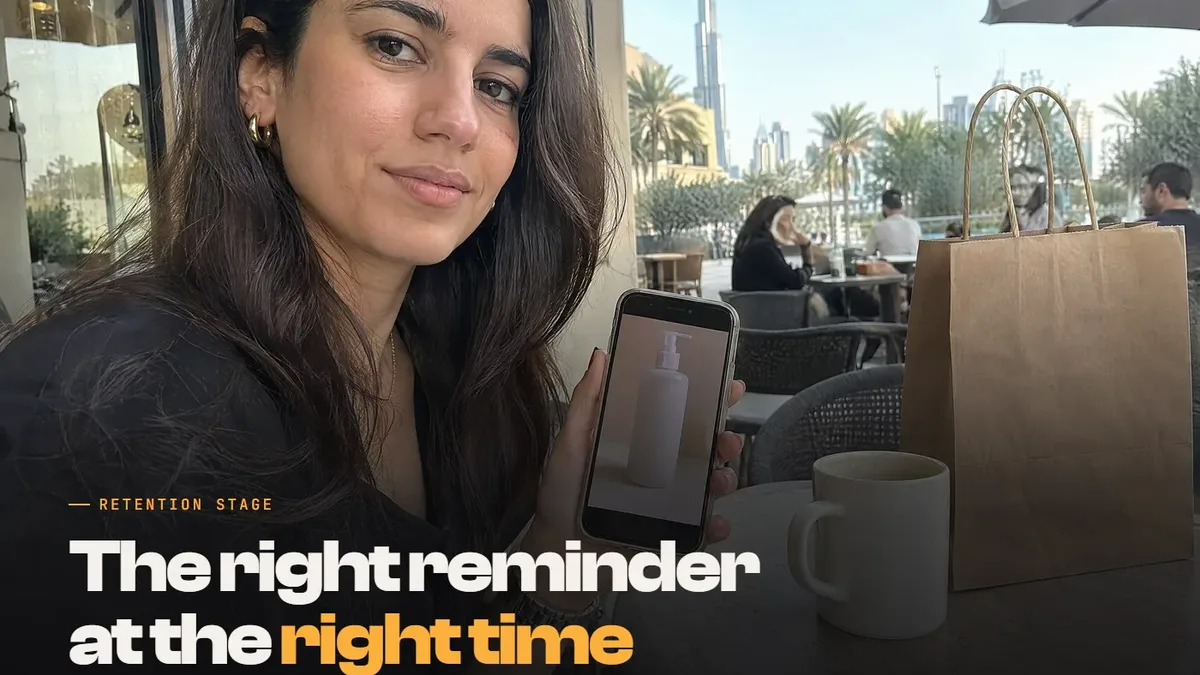
Look at how often a typical customer needs what you sell. A skincare brand might send a reminder shortly before a bottle runs out. A gym might check in when a member hasn't visited for a fortnight. Replenishment reminders, loyalty points and early access to new products all give people a reason to stay.
Retention is also the stage where you spot customers drifting away from your brand. A drop in opens or a longer gap between orders is an early warning. A personal win-back message sent at that moment stands a far better chance than one sent months later.
Stage five: loyalty and advocacy
Loyal customers buy often, forgive the odd mistake and recommend you without being asked. They're the most valuable people in your database, yet they often get the same generic emails as everyone else. Lifecycle marketing gives them recognition and early access that newer customers don't get yet.
Referral programmes, VIP tiers and requests for reviews all fit this stage. Ask loyal customers to share their story, because a real customer's words carry weight with people still in consideration. That loop links the end of the lifecycle back to the start, as your advocates bring in the next group of prospects.
Lifecycle marketing compared with the funnel and the customer journey
These three terms often get mixed up, and the differences shape how you plan. A marketing funnel describes how a large pool of prospects narrows down to a smaller group of buyers. Most funnels stop at the sale, which leaves retention and loyalty out of the picture.
The customer journey is the same path seen from the buyer's side, with every touchpoint they meet along the way. Lifecycle marketing sits across both of them. It takes the journey map, extends it past the first purchase and gives each stage a goal and a message. In practice, you'll use the funnel to report on acquisition and the lifecycle to plan what you send.
The channels behind a lifecycle programme
Lifecycle marketing isn't tied to one channel, though email usually carries the most weight. Email is cheap to send and easy to automate, and you personalise it with a name or a past order. Here's how the main channels tend to fit together:
Email carries most planned sequences, from the welcome series through to win-back messages.
SMS and WhatsApp suit timely notes such as booking reminders or delivery updates.
Paid social and search retargeting reach people who visited your site and left before acting.
On-site personalisation changes what a returning visitor sees, such as products related to a past order.
App push notifications work for light, regular nudges once someone has opted in.
Sales calls and account reviews take the lead in B2B, where one person usually owns each relationship.
The right mix depends on where your customers already spend their time. A clinic's patients might prefer WhatsApp reminders, while a software buyer expects detailed email and a named contact.
Lifecycle marketing examples from four industries
The stages stay the same across industries, but the messages and the timing change a lot. Here's how the approach plays out in four common settings.
Clinics and healthcare
A clinic's lifecycle runs from the first search to a booked consultation, then on to treatment, aftercare and a return visit. Appointment reminders help cut no-shows, and aftercare messages show patients their recovery matters to the clinic. Segmenting by department and patient stage lets a clinic send the right message instead of one newsletter to everyone.
For German Medical Center, a multi-specialty clinic in Dubai, Adnika built deeply segmented audiences and ran personalised Google and social media ads against them. Segmented contact like this sits at the centre of Adnika's healthcare marketing for clinics.
Hotels and restaurants
In hospitality, the lifecycle starts before the guest arrives. A pre-arrival email confirms the details, suggests a dinner booking and shares what to expect on the first morning. A thank-you note and a review request after checkout keep the stay fresh in the guest's mind. An anniversary message a few months later gives them a reason to book again.
Restaurants follow a similar pattern with birthday offers, new menu launches and invitations for regulars. Repeat guests matter as much as new ones, so lifecycle plans are central to the work of any hospitality marketing agency in Dubai.
Schools and universities
Education has a long lifecycle that often starts a year or more before a student enrols. A family might enquire, attend an open day, apply and then accept a place. Each step needs its own message, from a prospectus follow-up to an application reminder. After enrolment, the focus shifts to keeping students engaged and turning graduates into alumni who refer others.
Planning contact at every one of these steps, rather than only at the open day, is the core of education marketing for enrolment.
Online shops
Online shops collect a lot of behaviour data, which makes lifecycle marketing a natural fit. The standard flows include a welcome series, browse and cart reminders, post-purchase emails, replenishment prompts and a win-back series. Each one is triggered by something the shopper does, so the message lands when it's most relevant.
A shopper who leaves a full cart gets a reminder within hours. A buyer who hasn't ordered in a while gets a different note, perhaps with new arrivals in a category they like. The logic is the same as in a clinic or hotel, with shorter gaps between each stage.
How to build a lifecycle marketing programme
You don't need to build every flow at once. Start with the stage where you're losing the most people, get that working, then move on to the next. These six steps work for a small shop and a large B2B firm alike.
Step one: map your stages and the signals between them
Write down the stages that fit your business and give each one a plain definition. Then name the action that moves a person from one stage to the next, such as a first purchase or a second booking. Without these signals, your automation has nothing to react to.
Step two: bring your customer data into one place
Lifecycle marketing depends on knowing who did what and when they did it. If your website, shop and CRM each hold a different version of the customer, your messages will clash. Connect them so every system agrees on each person's stage. Most CRMs include a lifecycle stage field, and keeping it accurate matters more than adding new tools.
Step three: segment by stage and behaviour
Group your contacts by stage first, then split each stage by behaviour or value. A first-time buyer who spent a lot needs different follow-up from one who picked up a small item on sale. Keep each segment large enough to justify its own message, as dozens of tiny groups create more work than they return.
Step four: write the message for each stage
For every stage, decide what the person needs to hear to take the next step. Write that down as a single goal before you draft any copy. A welcome email should build trust, while a win-back message should give a clear reason to return. Match the tone to the relationship, since a loyal client expects warmer language than a first-time visitor.
Step five: set the timing and the exit rules
Decide when each message goes out and what stops it. If someone buys halfway through a sales sequence, they should leave that sequence straight away and move into onboarding. Cap the total number of messages a person gets each week across all your flows. Several emails from one brand on the same day feel like spam, even to a loyal fan.
Step six: measure, test and adjust
Review each flow on a set schedule, such as once a month. Look at how many people reach the next stage, not only how many open the email. Test one change at a time, such as a subject line or a send delay, so you know what caused the result. A small fix to a busy flow is often worth more than a brand new campaign.
The metrics that show lifecycle marketing is working
Open and click rates tell you whether people read a message. They don't tell you whether the programme is growing the business, so track these numbers as well:
Stage conversion rate, the share of people who move from one stage to the next in a set period.
Time between stages, such as the days from sign-up to first order or from first to second order.
Repeat purchase rate, the share of customers who buy more than once over a year.
Customer lifetime value, the total revenue a typical customer brings in over the whole relationship.
Lapse rate, the share of active customers who stop buying or cancel within a period you choose.
Seeing these numbers side by side turns lifecycle marketing from guesswork into a plan you improve each month. The Adnika Dashboard: one live view of a client's ads, analytics and CRM data, with AI recommendations reviewed by the strategist. A client running a lifecycle programme sees in that view where each customer group stalls and which flow moved people on.
Where AI fits in lifecycle marketing
AI now handles several lifecycle jobs that used to take hours of manual work. Churn models flag customers who are likely to lapse, so you reach them before they go quiet. Send-time tools pick the hour each person tends to open email. Recommendation engines choose products for each shopper based on what they bought before.
The output still needs a person checking it against the brand and the customer. A model might suggest a discount to someone who would have paid full price anyway. A human reviewer catches that kind of mistake before it costs you margin. Teams without data and automation skills in-house often get this set up by an AI agency in Dubai.
Common lifecycle marketing mistakes
Most programmes that stall make one of a handful of mistakes. The first is treating every contact the same when a large list mixes loyal clients with cold leads and lapsed buyers. One message won't serve all of those people, so the results look weak and the programme gets dropped.
The second is stopping at the sale. A plan with nothing for customers after their first order leaves your likeliest repeat buyers without a reason to return. The third is sending too much, because every flow looks sensible on its own but together they flood the inbox.
The fourth is judging success by opens alone. Measure revenue and stage movement first because a flow with modest open rates might still drive the most repeat orders. The last is setting flows live and never touching them again while offers expire and customer habits shift.
Getting started with lifecycle marketing
Pick one stage where you're losing people today and build a single flow for it. For many brands, that's the gap between the first and second purchase. Run the flow for a month, fix what's weak, then add the next stage.
If you'd rather have a team plan and run the whole programme, talk to our retention and lifecycle marketing agency in Dubai. Those flows then connect with the ads and content bringing new people in, as the service is part of our growth marketing agency in Dubai.