Contents8
- The difference between 2D and 3D animation
- Jobs that suit 2D animation
- Jobs that suit 3D animation
- Comparing the two styles side by side
- How to choose between 2D and 3D for your brief
- AI animation tools and where they fit
- Measuring which style works once it runs
- Start with the message, then pick the style
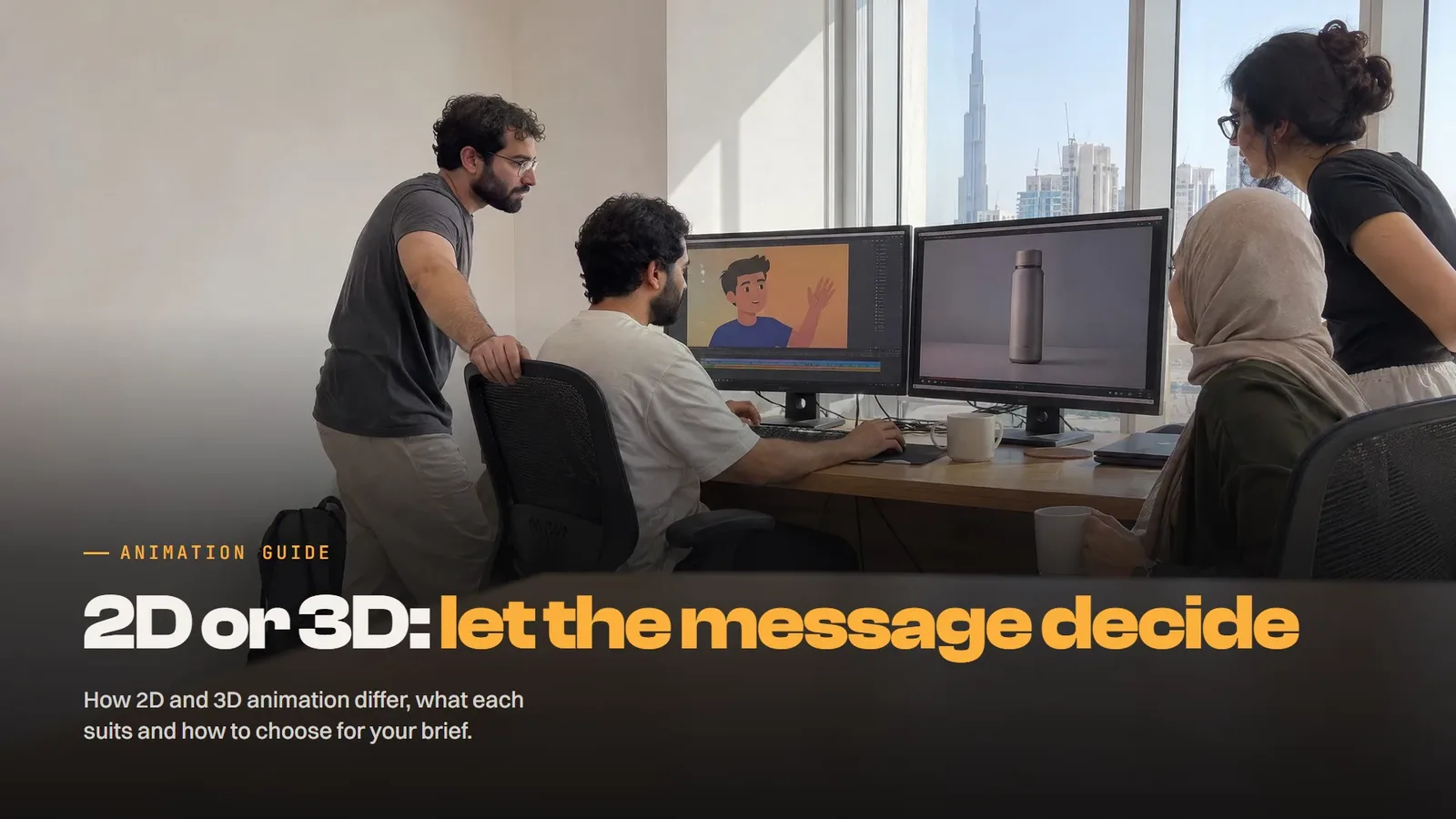
Anyone commissioning an animated video meets the same fork early on: flat drawings or modelled objects in a virtual space. If you're working with an animation company in Dubai, this choice shapes the schedule, the look and where the video can run. This guide compares 2D and 3D animation in plain terms, so you can brief the right one with confidence.
The difference between 2D and 3D animation
2D animation lives on a flat plane with height and width only. Artists draw characters frame by frame or build them from vector shapes that move along a timeline. Depth is an illusion made with shading, overlap and scale, the same tricks an illustrator uses on paper.
3D animation starts with models built in a virtual space, each with real depth. A modeller shapes the object, a rigger gives it a skeleton and an animator moves it. A computer then renders every frame from a virtual camera, with lights placed as they would be on a real set.
That one difference drives most of the trade-offs below. In 2D, a new camera angle means redrawing the scene, while in 3D the camera moves freely around a model that already exists.
Jobs that suit 2D animation
2D is the natural fit when the message matters more than the object. Explainers for a service or an app suit 2D, because an abstract idea is easier to draw than to model. A flow of money between accounts or a patient's booking journey reads clearly as simple shapes and icons.
Beyond explainers, 2D tends to suit these jobs well:
Short social clips, where bold colour and quick cuts need to hold attention from the first frame.
Character-led brand stories, where a recognisable drawn style becomes part of the brand itself.
Data stories and animated infographics, where numbers and charts need to move in a clear order.
Kinetic type videos, which carry a lot of on-screen text without feeling heavy to watch.
In 2D, swapping a line of on-screen text or a brand colour is quick, because the layers stay editable until export. Redesigning a character after animation starts is slow, since every frame that shows the character has to be redrawn.
If your campaign runs in Arabic and English, plan both versions at the storyboard stage. Arabic reads right to left, so text animations and screen layouts often need mirroring as well as translation.
Jobs that suit 3D animation
3D pays off when the viewer needs to see a real object from more than one side. Product demos are the clearest case: a 3D model can rotate, open up or split into an exploded view that shows every part. A camera that flies through the inside of a machine shows how it works far better than a drawing would.
Other jobs where 3D tends to win:
Property and architecture walkthroughs, where buyers see a finished home or tower before construction ends.
Medical and technical visuals, such as how an implant sits in the jaw or how engine parts move together.
Premium product films for perfume or watches, where light on glass and metal sells the finish.
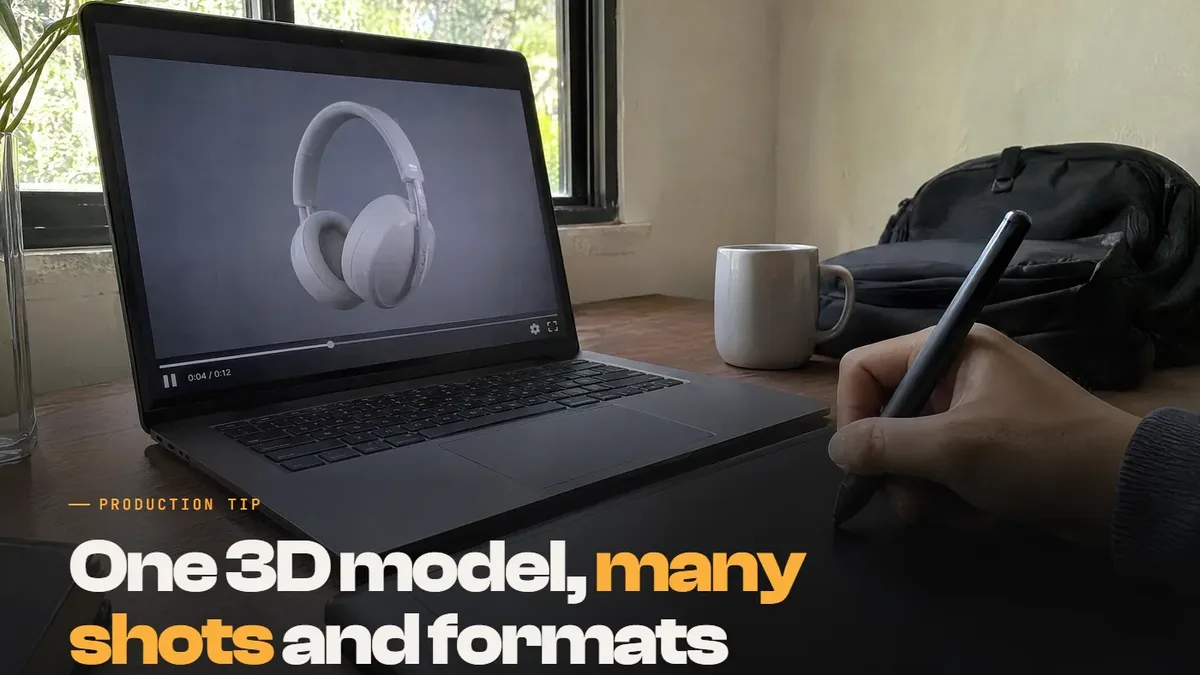
A product film's model can often be reused in 3D website design, as an interactive viewer on your site. The same model also produces still renders for ads and catalogues, which saves arranging a separate photo shoot.
The trade-off is effort up front, because modelling, texturing and rigging all happen before a single shot moves. Rendering then adds machine time at the end, and a late change to a model's shape can mean redoing the rig.
Comparing the two styles side by side
On look, 2D comes across as illustrated and graphic, which suits friendly or playful brands. 3D feels solid and physical, so it's the stronger choice for products that buyers judge by their finish.
On effort, a 2D explainer usually moves from script to final cut with fewer stages, so it's often the quicker and lighter option. 3D asks for more set-up before anything moves, but each extra shot of an existing model takes comparatively little time.
3D wins on reuse when you need many angles and formats from one asset over a long campaign. 2D wins for a message that changes often because text and colour edits stay simple until export.
Plenty of good projects mix the two, for example a 3D product placed inside 2D motion graphics. The object looks real, while the text and icons around it stay light and quick to change. Another option sets flat 2D layers at different depths, so a moving camera adds parallax without building full models.
How to choose between 2D and 3D for your brief
Run through these checks before you write the brief, and the choice usually makes itself.
If the hero of the video is an idea or a process, start with 2D.
If the hero is a physical product or a building that buyers need to see from several sides, lean towards 3D.
If you need many short versions for Reels, Stories and YouTube ads, ask how each style handles new formats.
If the same asset should later appear on your website or in print, a 3D model gives you more to work with.
If the message is likely to change every quarter, 2D keeps those updates simple and quick.
When the checks point in different directions, a hybrid usually serves the brief well. Ask your studio for a style frame in each look before anyone animates a single shot.
AI animation tools and where they fit
AI video tools now turn a prompt or a still image into a short moving clip. They're useful for mood boards and rough animatics, where speed matters more than control. For a finished brand film, keeping a character or a product identical from shot to shot is still hard to pin down. We weigh those trade-offs in more depth in our piece on AI content vs human content.
Measuring which style works once it runs
Once the video goes live as an ad, the style question becomes something you can measure. The Adnika Dashboard: one live view of a client's ads, analytics and CRM data, with AI recommendations reviewed by the strategist. If you test both styles on one ad, that view shows the 2D cut against the 3D cut by the leads each brings in. Your next brief can then rest on results from your own audience.
Animation works harder inside a wider plan, where one hero video is cut down for each channel. Planning those versions is the work of a content marketing agency in Dubai, and it tells your studio how many cuts to deliver.
Start with the message, then pick the style
Neither style wins in general: 2D suits ideas and messages that change often, while 3D suits objects that have to convince on looks. Decide what the viewer must understand or see, then match the style to it. Bring your script and the one thing viewers must remember to your first briefing, and the style choice gets much easier.