Contents7
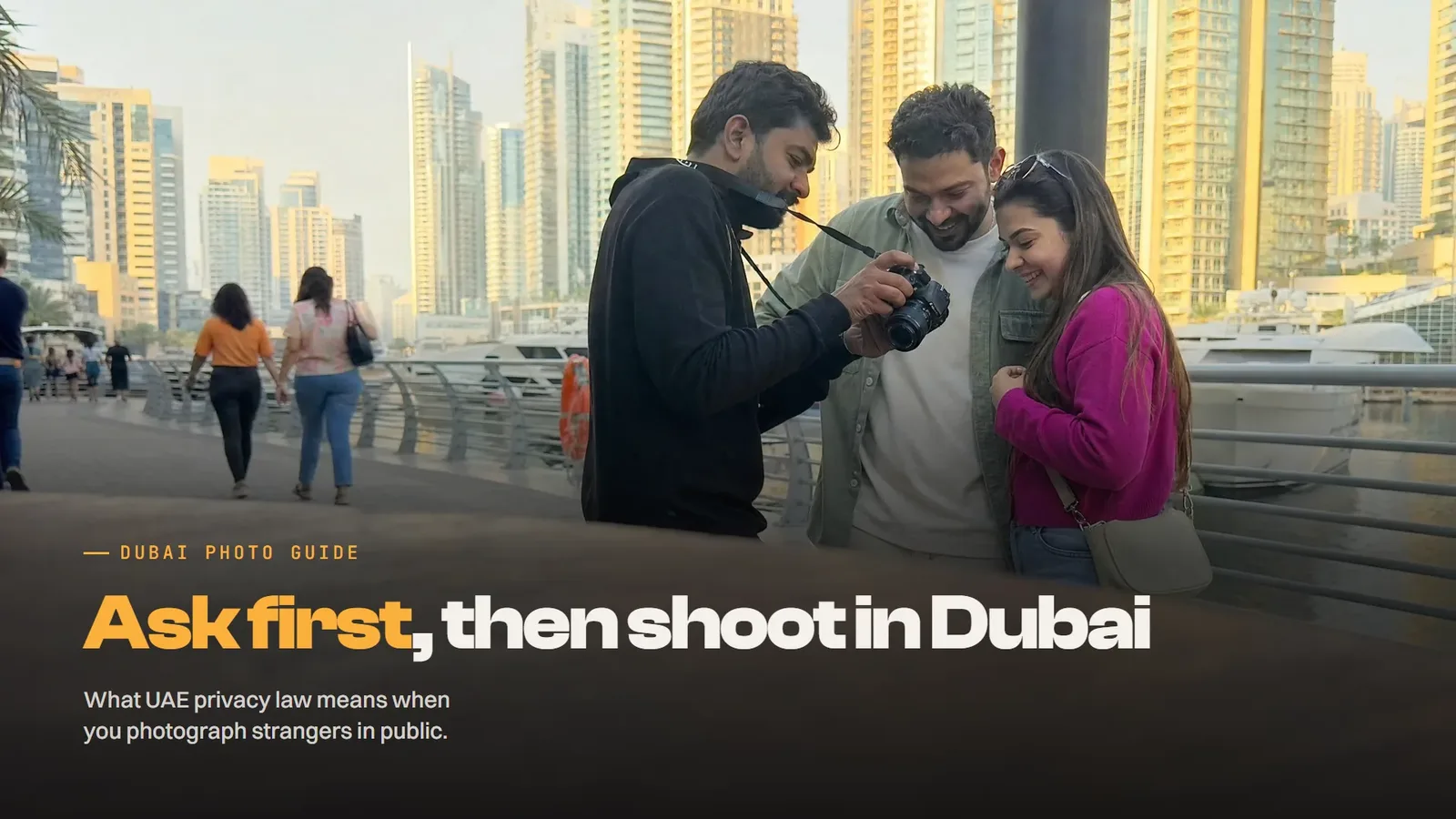
Most photos taken in Dubai cause no trouble at all, from the skyline at dusk to the dhows on the creek. The risk starts when a person becomes the subject, because UAE law protects privacy more strictly than many visitors expect. This guide explains where the line sits for tourists, residents and the businesses that photograph people for marketing. It isn't legal advice, so speak to a UAE lawyer if you're dealing with a specific complaint.
UAE privacy law and photos of people
The UAE's cybercrime law treats taking photos of other people without their consent as an invasion of privacy. Sharing, copying or saving those images without permission is covered too. The rule applies in public places as well as private ones, which catches out people used to looser rules at home.
The penal code adds its own privacy offences, and a post that harms someone's reputation can also bring a defamation claim. Penalties under these laws can include heavy fines and prison time, and they apply to residents and tourists alike. In practice, two questions matter most: could someone recognise the person in your photo, and did that person agree?
Safe subjects for your camera in Dubai
You're free to photograph landmarks, beaches and street scenes from public spaces. Wide shots where strangers are small, passing figures carry far less risk, though the law doesn't spell out an exception for them. Busy spots like the Dubai Fountain or the Marina walk are full of cameras, so crowds in the background are expected. Once a face is sharp and centred, treat that person as your subject and ask before you shoot.
Ask before you photograph these people
Ask before you photograph anyone who'd be clearly recognisable, and take extra care with these people:
Women and families, as many residents don't want strangers taking their picture and are more likely to complain if you don't ask.
Children, who you shouldn't photograph at all without a clear yes from a parent.
People praying, and visitors inside mosques, unless staff have told you photos are welcome.
Workers on the job, such as delivery riders or cleaners, who may not want their faces online.
For a personal shot, consent can be as simple as a smile and a nod after you've asked. If you plan to post the picture, say so, because agreeing to a photo isn't the same as agreeing to have it shared. If someone says no or asks you to delete a shot, do it in front of them.
Places and moments to keep your camera down
Some situations are off-limits whoever is in the frame. No-photography signs at government buildings and military sites mean exactly what they say, so put the camera away. Never photograph or film a road accident or the people hurt in it. UAE law treats photos of injured people or accident victims taken or posted without permission as an offence in their own right.
Private spaces call for even more care. Pointing a lens into someone's home or car, or filming people in changing rooms, is a clear breach of privacy under UAE law.
Posting the photo raises the stakes
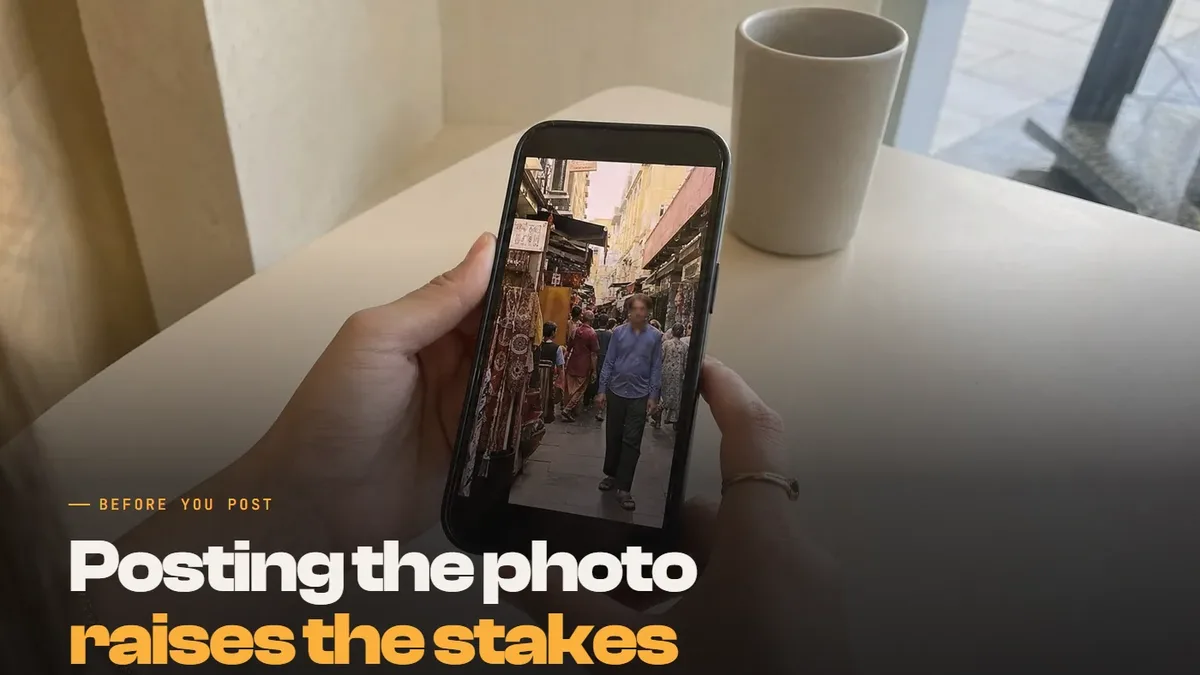
Taking a photo is one step, and posting it is another. Once a picture is online, the person in it may see it, and so may everyone they know. That's often how a quiet snap turns into a complaint, so run these checks before you share a shot with strangers in it:
Blur or crop out every face you didn't get consent for, even in the background.
Drop captions that mock or identify someone, since a harmful caption can add a defamation claim.
Remove the location tag if the photo shows where a person lives or works.
Take the post down quickly if anyone in it asks you to.
Reposting a stranger's photo that someone else took doesn't move the risk away from you. You're the one sharing it, so the same rules apply to your account.
Photos of real people in business marketing
For a business, the bar sits higher than it does for a holidaymaker with a phone. If a real person appears in an ad or on your website, get their written consent before it goes live. Keep that record with the image, noting where it'll run and for how long. Staff need the same care, because an employee who agreed to a team photo hasn't agreed to front a paid campaign.
If you're planning a shoot with real customers or staff, consent should sit in the brief you agree with your content marketing agency in Dubai. Stock photos you've paid to use sidestep the consent question, though they rarely feel as convincing as your own people. When a street scene works but a passer-by never agreed, you can hide them in the edit with photo retouching services in Dubai.
Video follows the same rules, so street interviews and trend clips need a clear yes on camera before you start recording. That matters most when your growth plan depends on short videos shot in public places for TikTok marketing in the UAE.
Once those consented photos are running as ads, you'll want to see which ones earn attention and which ones don't. The Adnika Dashboard: one live view of a client's ads, analytics and CRM data, with AI recommendations reviewed by the strategist. That means a brand running photo-led campaigns can compare each image ad with the leads it brings in.
A quick checklist before you shoot
Ask first whenever a stranger's face will be clear enough to recognise.
Leave children, accident scenes and no-photography sites out of your shots altogether.
Get written consent for any photo a business will publish, and keep the record.
Blur or crop anyone who didn't agree before the picture goes online.
Follow those habits and photographing Dubai stays a pleasure, for you and for the people in your frame. If you'd like help planning campaigns built on photos of real people, talk to the team at our digital marketing agency in Dubai.