Contents8
- What creative video production means for a brand
- Storytelling starts with your target audience
- Pre-production decides how the film turns out
- Shooting: capturing the moments the script promised
- Editing, animation and motion graphics
- Choose the format that fits the job
- Measure the impact and ROI of every film
- How to choose a creative video partner in Dubai
Most viewers decide within seconds whether a film deserves their time, and a bigger budget won't change that. What holds attention is a clear message, a story worth following and an edit that respects the viewer. This guide follows that work stage by stage, so you can brief a production partner well and judge the result.
What creative video production means for a brand
In video production, the thinking that shapes a film happens long before the camera rolls. Plenty of suppliers can film a product or a speech. The creative work lies in deciding what the film should say and who it's for. Every later choice then answers to that decision, from the casting to the final colour grade.
For a business, that decision carries real weight. A film is often the first time a buyer sees your people, so it shapes trust and reputation before anyone speaks to sales. Good storytelling gives viewers a reason to care, and high-quality images show you take your work seriously. Together they signal professionalism in a way a brochure can't.
Storytelling starts with your target audience
Every strong brief names one viewer and one action. Write down who the film is for, what they already believe about your brand and what you want them to do next. If you can't answer each point in a sentence, you aren't ready to shoot. A message only resonates when it speaks to a doubt or a goal your viewer already has.
That brief also sets the format. A vertical cut for social media needs its message in the opening shot, while a website film can take its time. Paid campaigns need more care, because different viewers respond to different openings. If your buyers speak Arabic and English, plan both versions at the script stage rather than adding subtitles at the end.
For German Medical Center, a multi-specialty clinic in Dubai, Adnika built deeply segmented audiences and ran personalised Google and social media ads against them. A video plan can follow the same logic, with a separate cut for each group. You'll spend longer on the brief, but each viewer sees a film that feels meant for them.
Pre-production decides how the film turns out
Most problems on a shoot begin in planning, which is why pre-production deserves more of your time than any other stage. This stage turns the concept into a script, a storyboard and a shot list. Start with several ideas, then identify the one that serves your goal most directly and drop the others. A simple one people remember beats a clever one they forget.
Scriptwriting comes next, since the script fixes the message and the length. Read every line aloud and rewrite anything that sounds like a brochure, because viewers hear stiffness at once.
Settle your design choices, such as the look and locations, before anyone books a crew, and check each one aligns with your brand guidelines. A moodboard of reference images helps the whole team picture the same film. It also prevents costly debates on set, when the crew is waiting and the light is going. In Dubai, summer heat and harsh midday sun limit outdoor shooting, so build that into the schedule.
Shooting: capturing the moments the script promised
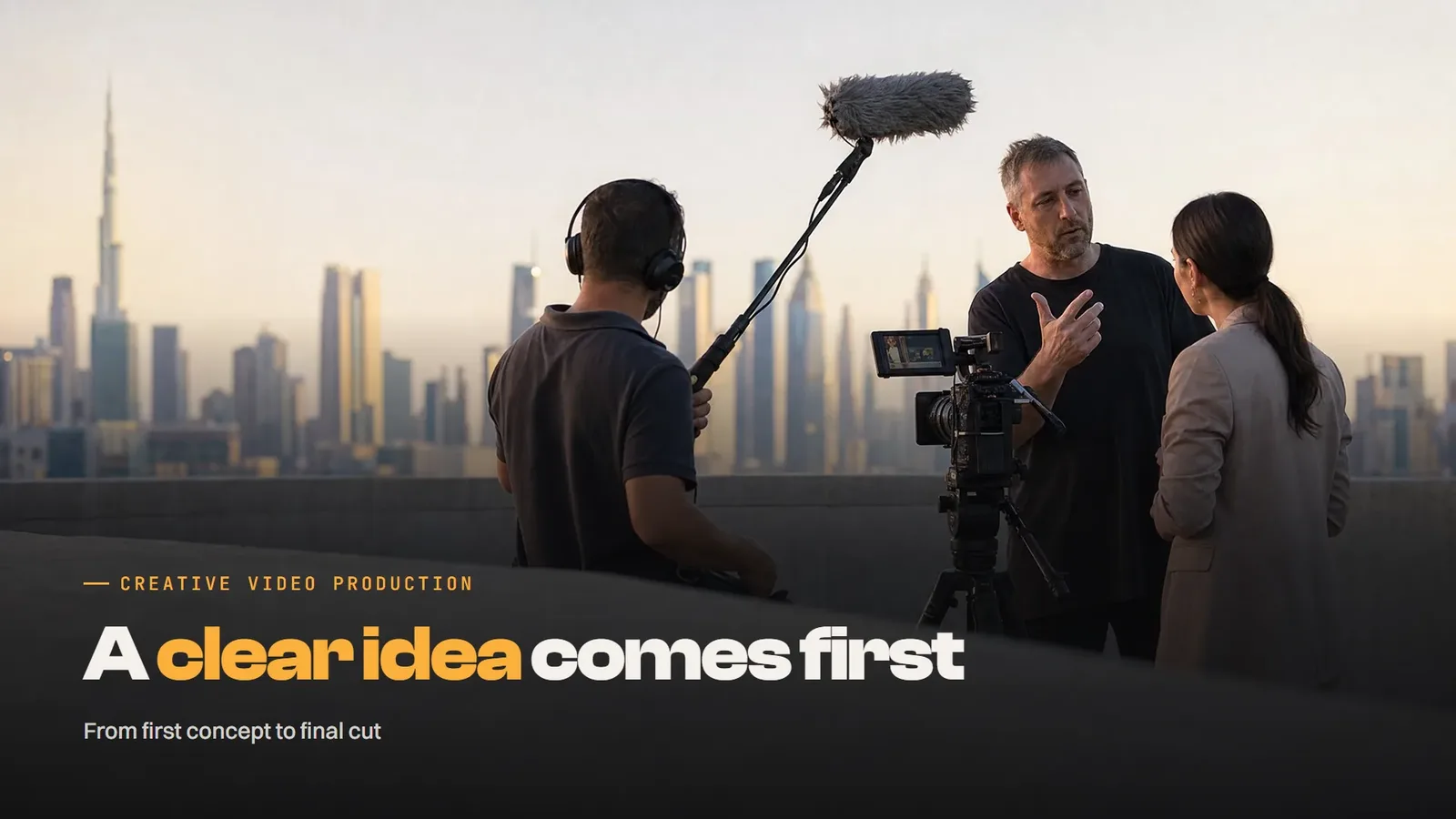
On the day, precision matters more than speed, so the director protects the story while the crew gets enough coverage for the editor. On screen, storytelling means showing a change rather than describing it. A customer's face as a problem gets solved says more than any voiceover.
Real people often give you the strongest footage, so leave room for an unscripted reaction that brings the film to life. A cinematic look comes from lighting, lens choice and patient camera movement far more than from the newest technology. Sound deserves the same care, since viewers forgive a plain shot sooner than muddy audio.
Editing, animation and motion graphics
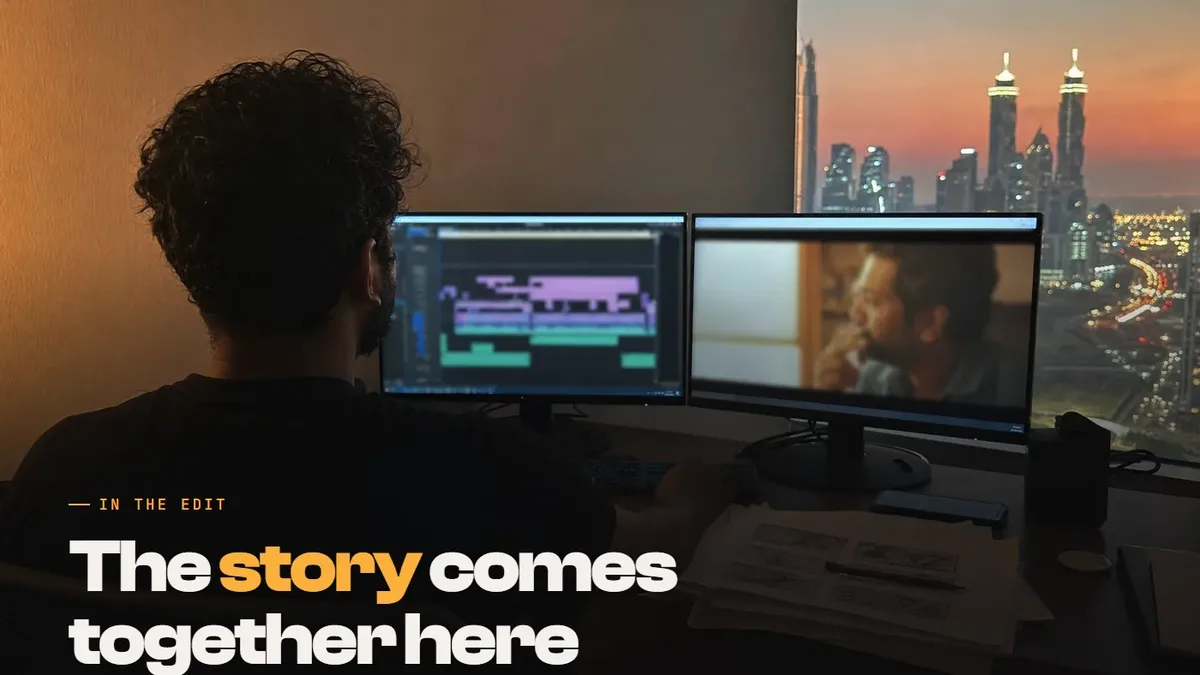
The edit is where the storytelling comes together. Editors choose the strongest takes, set the pace and cut anything that doesn't serve the message. Music and colour then shape the mood, and motion graphics make data or steps easier to follow. Where filming can't capture the subject, such as the inside of a machine, an animation company in Dubai can build it from nothing.
Plan for several cuts from one shoot, with a long version for your website and shorter edits for your paid and social content. That way one production day supports your wider content plan and keeps your brand's presence consistent across digital media. Ask for photography on the same shoot if you need matching stills.
Choose the format that fits the job
Different goals call for different films, and each of these common formats suits a different kind of video content:
A brand film explains what your business stands for and builds trust over time.
Corporate video production services in Dubai cover company profiles, leadership messages and internal updates.
Commercials chase one action, so they need the message early and a clear next step.
A product video shows how something works and answers the doubts that stop a sale.
Training videos teach every new hire the same way, which spares your trainers from repeating a session.
Event coverage keeps a launch or a conference working long after the doors close.
A corporate video without storytelling soon turns into a list of facts, so give it a person and a problem to follow. A technology firm, for example, might follow one customer through a difficult week rather than walking through its features. Viewers remember the person first and the product second, which produces engaging content even from a dry subject.
Event production needs different planning again, because nothing can be reshot. The crew maps the key moments in advance and sets up before guests arrive. Good event videography then gives you a highlight film for the next event and short clips for your content calendar. Treat event coverage as a source of content for the months ahead, as well as a record of the day.
Measure the impact and ROI of every film
Video should answer to the same numbers as the rest of your marketing. Views tell you a film was served, while watch time and engagement tell you whether people stayed. Leads and sales then show your ROI, so set those targets before you shoot and give the creative team a clear job.
Content that nobody sees earns nothing, so distribution matters as much as the film itself. Integrate each cut into your marketing plan rather than posting it once and moving on. Add captions for sound-off viewing, and write a useful title and description for search. Put the film on the page your buyers already visit, where it can engage them at the right time.
Once a film runs as a paid campaign, Adnika clients follow it in one place. The Adnika Dashboard: one live view of a client's ads, analytics and CRM data, with AI recommendations reviewed by the strategist. You see how each cut performs as an ad, then trace the site visits and CRM leads behind it. If a new opening brings increased watch time and better leads, you know which version to keep running.
How to choose a creative video partner in Dubai
When you compare media production services, start with portfolios, looking for work in your sector and asking who wrote and directed each piece. Ask to see a script from a past project as well as the finished film, because it shows how the team thinks. A good partner asks about your goals and pushes back on a weak script before explaining how the film will be measured.
Practical questions matter as well, so find out how many revisions are included, who owns the raw footage and what files you'll receive. High-quality work comes from a clear process, so ask to see that process before you sign. A team that can't explain its steps is unlikely to follow them under pressure.
Ultimately, a high-quality video is the result of clear thinking at every stage. Adnika is a video production company in Dubai that plans films and the campaigns behind them together. Bring your goal and your audience, and we'll start from there.