Contents13
- What Google Studied and Why
- How People Use AI Image Tools
- The Surprise: Memes Ranked Last
- What Marketers Asked AI Image Tools to Do
- Who This Affects in the UAE
- What a Dubai Business Should Do Now
- Brief the Image Like a Designer Would
- Write the Exact Words, Then Check Them
- Keep Your Brand Rules Next to the Prompt
- Know When to Shoot for Real
- Get Permission Before You Upload
- Test New Images Against Your Current Ads
- What the Researchers Still Can't Say
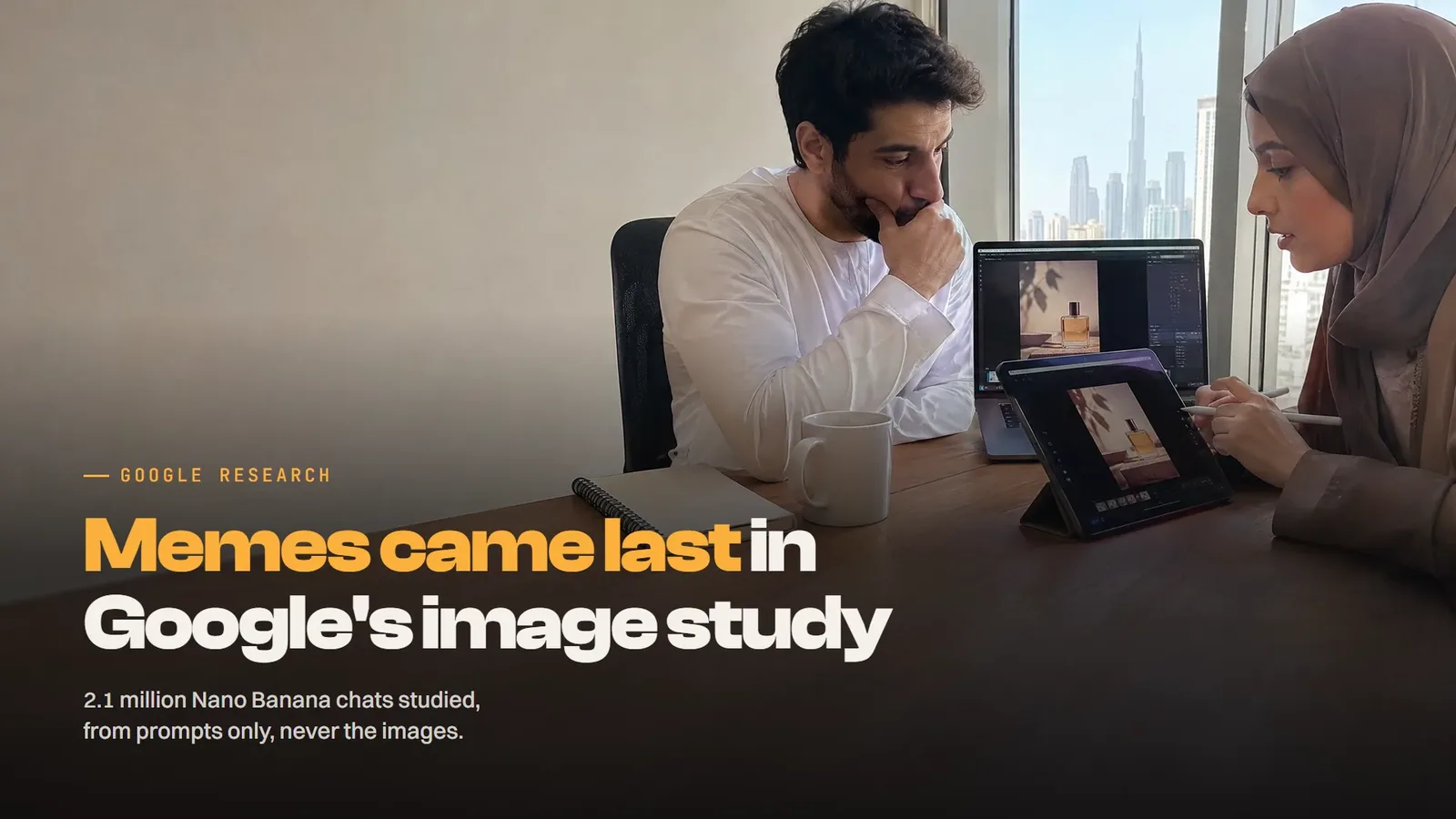
Google has published research on how people use Nano Banana, the image model in Gemini, and much of it is business work. Search Engine Journal recently reported on the paper, which studied 2.1 million conversations without looking at a single uploaded or generated image. The most surprising result is about memes, which ranked among the least common features in the data. If you use AI image tools to sell anything in Dubai, the rest of the findings are worth a close look.
What Google Studied and Why
People upload sensitive photos of themselves and their families to Nano Banana, so the privacy concern is real. Google's researchers wanted to learn how the tool gets used without viewing anyone's pictures. They noted there is limited data on how and why people use image generation, beyond what users post on social media. So the team studied the text prompts and conversations instead of the uploaded or generated images.
The method relies on Urania, a framework Google already uses to draw insights from chatbot conversations. The researchers grouped 2.1 million Gemini Nano Banana conversations into five categories, then compared how people behaved in each one. Google describes the work as a privacy-preserving descriptive analysis of how people use the tool.
How People Use AI Image Tools
The researchers tracked a set of features across those five categories, and each one says something about what users want. Image editing covers the fixes people ask for on a picture they already have or one they upload. That includes removing objects and people, swapping a background, adding new elements, and resizing or restoring an image.
Artistic style is where users take creative control of how the finished picture looks. Some name a medium, such as watercolour, a pencil sketch or an oil painting. Others go by mood and ask for a minimalist or film noir feel. The most creative prompts mix clashing styles or moods into a single mashup.
Composition requests describe the structure of the scene, such as where each subject is placed. Users set the lighting and the perspective, and many told the model what not to do. They also asked for people and said how many should appear in the shot.
Interactions look at the whole conversation, meaning how people keep refining and editing an image after the first result. Here one pattern stands out: asking the model to start from scratch was about twice as common as asking for a small change. For marketers, that suggests many people would rather throw out a weak draft than fix it.
A last group, called multi-select features, records extra detail about each request. It covers text and typography needs, the kind of change asked for, the work context and the stage of content creation. The researchers also noticed that many prompts describe the vibe someone wants without giving any specifics.
The Surprise: Memes Ranked Last
The study shows Nano Banana is used for far more than viral social media posts. People were also making images for commercial work, educational illustrations, technical instructions and product visualisations. In the social and viral categories, meme formats and humour were the least common features of all.
The most common feature was people, who appeared in most of the conversations Google studied. Requests about composition and artistic style were also common across the data.
What Marketers Asked AI Image Tools to Do
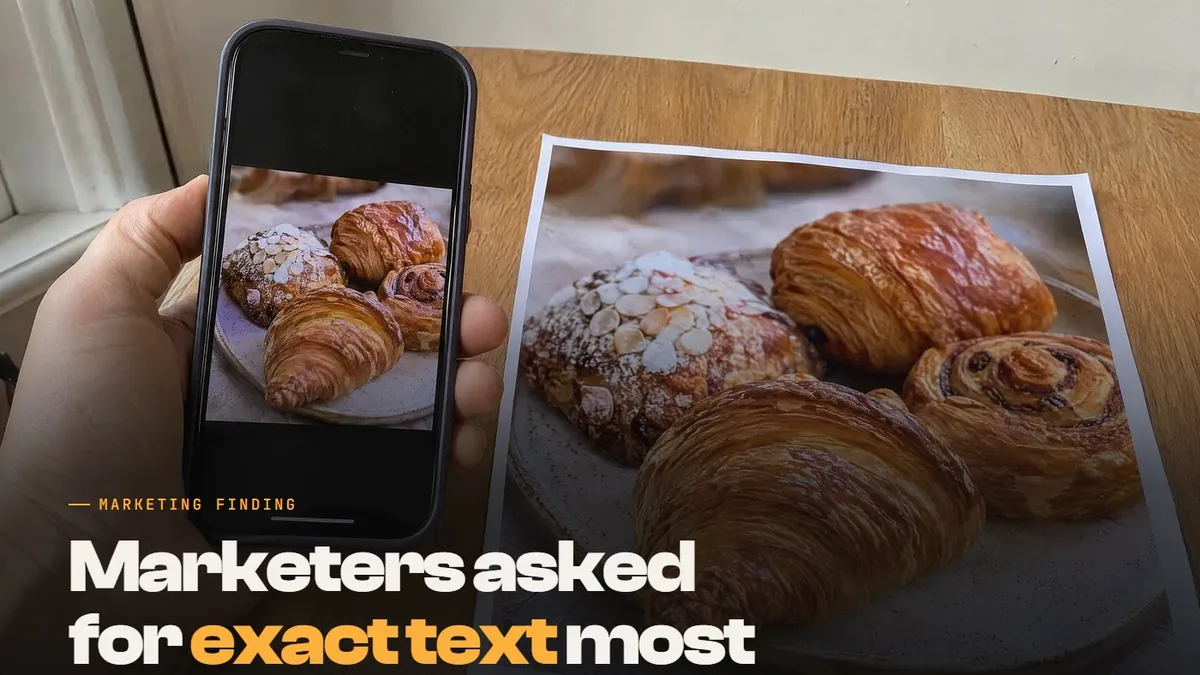
The brand and marketing category is where the findings get practical for anyone selling a product or service. Marketers cared most about control: where elements sit, which people appear, how the light falls and what must stay out of the shot. This category also had the highest share of requests for exact text and detailed typography of all five. In plain terms, marketers are making promotional images to a brief with fixed wording and design rules.
Small businesses, individuals and side hustles showed up in this category more than in any other. Much of the brand work was for original or fictional brands rather than established companies. The researchers suggest some users may be building branding for new or speculative businesses. Typical tasks included refining logos, changing text and colours, making promotional material and building a consistent visual brand identity.
Who This Affects in the UAE
These findings raise a practical point for small businesses in Dubai and across the UAE. If you run a coffee shop, a salon or an online store, you might already be making social posts and flyers with AI. The study suggests small firms and side hustles lean on these tools more than big brands do. Start-ups building a brand before launch fit the same pattern, given how much of the brand work involved new or unknown names.
Online sellers should take note too, since product visualisations were one of the uses the study picked out. Much of this work depends on the text inside the image being right. A sports bar's game night poster needs the correct date, and a sale banner needs the correct offer. If your ads carry Arabic and English text, both versions need the same care.
What a Dubai Business Should Do Now
The study describes behaviour rather than results, but its patterns point to a few habits worth building into your own marketing.
Brief the Image Like a Designer Would
The vague, vibe-only prompts the study found are the habit to drop, because vague briefs tend to give vague results. Spend a few minutes on the brief before generating anything. Say where the product sits, who is in the frame, what the light looks like and what should stay out. Each draft takes a minute or so, yet a clear brief can save you a long string of redos.
Write the Exact Words, Then Check Them
Put the exact text in quotation marks in your prompt, and say which font style you want and where it goes. Then read every letter at full size, because one wrong digit in a phone number costs you calls. A logo that looks sharp on a phone can blur on a shop banner, so check the pixel size before anything goes to print.
Keep Your Brand Rules Next to the Prompt
Consistency is the hard part when every image starts from a fresh prompt. Keep a short brand guide with your colours, fonts and logo rules, and paste the relevant lines into each prompt. Save the prompts that work so your team reuses them rather than starting over each time.
Know When to Shoot for Real
AI images suit quick tests, such as checking a product concept before you commit to a full shoot. For a main campaign, real products and real people in your own space often carry more weight. When you need footage of your own team and premises, work with a video production company in Dubai. You can also combine the two, filming the main piece on set and making quick variations with AI video production.
Get Permission Before You Upload
Privacy is why Google studied prompts and left the images alone, and the same caution makes sense for your business. Get clear permission before you upload a photo of a customer or a member of staff. Keep sensitive images, such as ID documents or children's photos, out of prompts altogether.
Test New Images Against Your Current Ads
Treat AI-generated images like any other ad creative and test them against the photos you already run. Run each version long enough to compare results fairly, and change one thing at a time. The Adnika Dashboard: one live view of a client's ads, analytics and CRM data, with AI recommendations reviewed by the strategist. For a client testing AI images in paid ads, that view puts each version's results next to the leads in the CRM.
To plan where AI fits across the rest of your content, start with our work on AI content generation.
What the Researchers Still Can't Say
The researchers conclude that AI image generation now supports a wide range of business, marketing and creative work. Some of those tasks used to need professional experience, and they're now within reach of more people. What they can't yet tell is whether AI creates entirely new activities or makes existing ones cheaper. That remains an open question, and they expect more uses to appear as people keep experimenting.
Until the next study, brief clearly, check every word and test before you scale up.